Plumbing failures in commercial buildings do not merely cause inconvenience - they disrupt tenants, create health and safety risks, trigger compliance concerns, and can result in substantial water damage if not addressed with urgency. For building managers and property managers overseeing multi-tenanted offices, retail units, and managed buildings across Central London, having a reliable commercial plumber capable of responding the same day is not a luxury - it is an operational imperative.
This guide covers the most common plumbing repair requirements in commercial properties, the critical difference between commercial and domestic plumbing work, how to prevent costly failures through planned maintenance, and what to demand from any plumber you allow into a managed building.
The Most Common Commercial Plumbing Repairs
After completing thousands of commercial plumbing call-outs across Central London, the following categories consistently account for the vast majority of reactive repair requests from property managers:
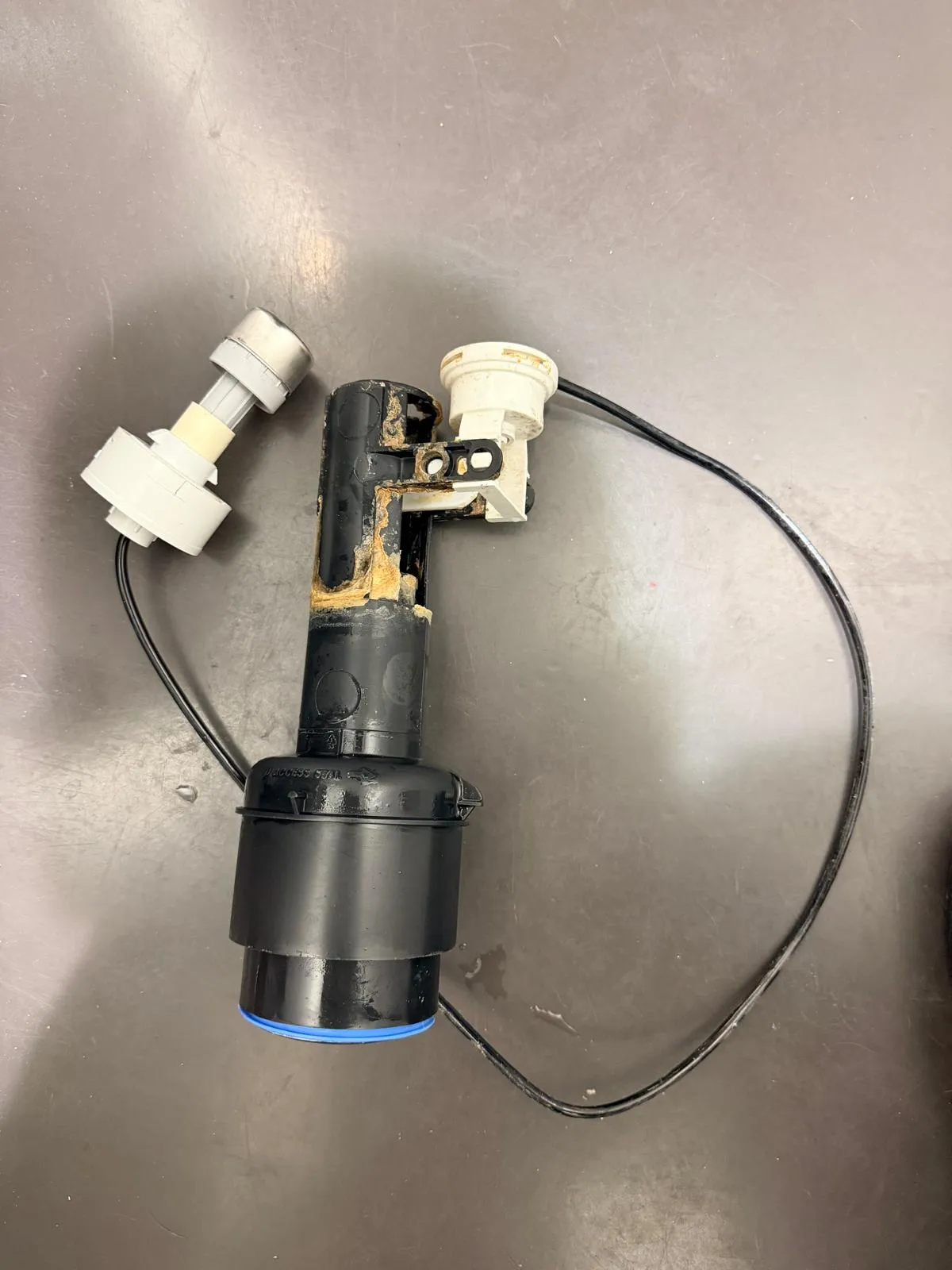
Toilet & Cistern Repairs
Inlet valve replacement, flush mechanism failure, continuous running, phantom flushing, and cistern overflow. The single most frequent call-out in commercial buildings.
Valve Replacement
Isolation valves, service valves, gate valves, and check valves. Corrosion and mineral build-up cause seizure - preventing emergency shut-off when it matters most.
Tap & Mixer Repairs
Washer replacement, ceramic cartridge failure, thermostatic mixer valve (TMV) servicing, and dripping taps in washrooms and kitchen areas.
Blocked Drains
Washbasin, urinal, and floor drain blockages. Commercial buildings generate higher volumes of waste - blockages are more frequent and more consequential than domestic equivalents.
Leak Detection & Repair
Concealed pipe leaks, joint failures, flex hose deterioration, and overflow pipe discharge. Early detection prevents ceiling damage, mould growth, and tenant disruption.
Water Pressure Issues
Low pressure diagnostics, PRV (pressure reducing valve) adjustment, boosted system faults, and pressure fluctuation between floors in multi-storey buildings.
"A single faulty toilet in a busy commercial building with 200 occupants affects dozens of people every hour. It is one of the highest-priority repairs a building manager should address - ideally within the same working day."
Why Commercial Plumbing Is Different
The fundamental distinction between domestic and commercial plumbing work lies not in the technical skill required - a valve replacement is a valve replacement - but in the operational context, the liability exposure, and the consequences of failure.
Scale and Complexity
A residential property typically has a single cold water main, one or two hot water systems, and a straightforward drainage layout. A commercial building in Central London may have boosted cold water systems serving multiple risers, centralised or distributed hot water plant, complex drainage networks with multiple soil stacks, and specialist systems such as grease traps, rainwater harvesting, or chilled water loops.
Understanding how these systems interconnect - and knowing where the isolation points are - is the difference between a contained repair and a building-wide shutdown.
Liability and Insurance
A plumbing failure that causes water damage in a commercial building can rapidly escalate into a six-figure insurance claim. Damaged IT equipment, disrupted trading operations, contaminated stock, and displacement of tenants all generate consequential losses that far exceed the cost of the repair itself.
Any plumber working in a commercial building must carry a minimum of £5,000,000 Public Liability Insurance. This is not negotiable. A domestic plumber with £1M cover may be technically competent, but their insurance policy is not designed to indemnify against the scale of loss that a commercial water event can generate.
Valve Failures - The Silent Risk
Isolation valves and service valves are among the most overlooked components in any commercial plumbing system. They are rarely used - which is precisely why they fail. Corrosion, mineral deposits, and rubber degradation cause valves to seize in the open position over time. When an emergency occurs and you need to isolate a supply, a seized valve means the difference between shutting off water to one floor and shutting off the entire building.
What We Typically Find During Inspections
- Gate valves seized open due to years of inactivity - cannot be turned without risk of snapping
- Quarter-turn isolation valves with failed O-rings - passing water even in the "off" position
- Corroded check valves allowing backflow between hot and cold supplies
- Missing or unlabelled valve identification - no one knows which valve controls which zone
- Flexible hose connections past their recommended lifespan - a leading cause of concealed leaks
- PRVs set incorrectly or never serviced - causing pressure spikes on upper floors
A quarterly valve inspection programme - part of a broader planned maintenance schedule - is the most cost-effective way to prevent emergency failures. Each valve should be exercised (opened and closed), labelled, and its condition recorded photographically.
Emergency Plumbing - What to Expect
When a plumbing emergency occurs in a commercial building, the response protocol should follow a clear sequence:
- Identify and operate the nearest isolation valve to contain the water supply
- Notify affected tenants and building management immediately
- Contact your maintenance contractor - provide the building address, the nature of the issue, and the location of the affected zone
- Document the incident with photographs and timestamps for insurance purposes
- Ensure the contractor provides a same-day Job Completion Report upon resolution
Response time is critical. Every hour of unresolved water ingress compounds the damage - to ceilings, to walls, to flooring, and to the electrical infrastructure concealed behind them. A contractor who cannot attend within four hours during business hours is not equipped for commercial emergency work in Central London.
Planned Plumbing Maintenance - Prevention Over Reaction
The most effective way to manage plumbing costs in a commercial building is to invest in a structured preventive programme rather than waiting for failures to occur. A planned plumbing maintenance schedule should include:
- Quarterly valve exercise and inspection across all isolation points
- Bi-annual washroom audit - cisterns, taps, flush mechanisms, waste traps
- Annual water pressure check at multiple points in the building
- Flexible hose replacement on a five-year cycle (or sooner if deterioration is evident)
- Drain survey and jetting for shared drainage runs in high-use areas
- TMV servicing in accordance with HSE guidance (minimum annual)
"Buildings on a planned plumbing maintenance programme typically experience 60-70% fewer emergency call-outs than those managed reactively. The cost saving over a 12-month cycle is substantial - and the reduction in tenant disruption is immeasurable."
What Your Plumbing Contractor Should Provide
Beyond the technical repair itself, a commercial plumbing contractor should deliver a standard of documentation and professionalism that matches the expectations of a managed building environment:
- Same-day Job Completion Report with before-and-after photographs
- Clear description of the fault, the repair carried out, and any follow-up recommendations
- Materials specification - brand, part number, and warranty details where applicable
- Net 7 corporate invoice with full company details - not a handwritten receipt
- Enhanced DBS clearance for every operative attending the building
- RAMS (Risk Assessment and Method Statement) available upon request for any works
3COL Commercial Plumbing - Central London
3COL Maintenance Services provides same-day commercial plumbing repairs across W1, WC2, EC1, EC2, SW1, SW3, SE1, and E14. Every operative is Enhanced DBS-checked, carries appropriate plumbing qualifications, and works under our £5,000,000 Public Liability Insurance.
We deliver written Job Completion Reports with photographs on the day of every visit. Our standard payment terms are Net 7, and all Central London operational costs are included transparently in every quotation - Congestion Charge, ULEZ, and parking.
Toilet and Sanitary Ware Repairs
Toilet failures in commercial buildings are among the highest-priority maintenance issues - directly affecting tenant satisfaction and building usability. Common issues include cistern faults and running toilets, seat and lid replacements, flush valve failures, blockages in the soil stack, and damaged or leaking toilet connections. 3COL carries out all of these repairs promptly across Central London, using quality parts and providing a 6-month workmanship guarantee on all works.
For commercial buildings with multiple toilet facilities - particularly those with older sanitary ware - a quarterly plumbing inspection that includes a check of all toilet cisterns, flush mechanisms, and visible pipework is the most cost-effective approach. Problems identified and fixed at inspection are always cheaper than emergency repairs when a fault becomes acute.
Valve Repairs and Replacements
Valve failures are a common but often overlooked maintenance issue in commercial buildings. Stop valves that have not been operated for years can seize in the open position, making isolation for emergency repairs impossible. Gate valves on heating systems deteriorate and leak. Pressure reducing valves fail and cause water pressure issues across the building.
3COL carries out valve inspection and replacement as part of planned maintenance programmes - checking that all isolation valves are operable, replacing seized or deteriorated valves before they become an emergency, and ensuring that the water supply to every section of the building can be isolated quickly when needed.
Frequently Asked Questions
How quickly can 3COL repair a plumbing fault in a London office?
3COL operates a 4-hour response target for plumbing emergencies across Central London. For non-emergency repairs, same-day and next-day appointments are available. Call 07505 992 743 for an immediate response.
What are the most common plumbing repairs in London commercial offices?
The most common repairs include toilet cistern and flush valve issues, tap and mixer repairs, blocked drain clearing, valve replacements, water pressure issues, and leak detection in concealed pipework.
Can plumbing repairs be carried out in an occupied London office?
Yes. Most repairs can be carried out with minimal disruption. Water supply isolation is typically brief and coordinated with building management in advance.
Does 3COL provide same-day plumbing documentation?
Yes. Every plumbing job includes a same-day written completion report with photographic evidence, provided on the day of completion as part of the maintenance record.
Plumbing issue at your commercial property?
Same-day response. Free quotation. Written report on completion. Monday-Saturday.
Call Us Now