
Office dilapidations:
a tenant's guide
The definitive guide for commercial tenants. Section 18, the Dilapidations Protocol, cost guidance and exactly how to reduce your liability before the landlord's schedule arrives. Need the works done? See our office dilapidations service →
Sources: Dilapidations Pre-Action Protocol (Civil Procedure Rules) · Landlord and Tenant Act 1927 s.18
Dilapidations are breaches of the repairing, decorating, and reinstatement obligations in a commercial lease. At lease end, a landlord can claim the cost of remedying those breaches from the outgoing tenant. The claim is governed by the Landlord and Tenant Act 1927 (Section 18), the Dilapidations Pre-Action Protocol (Civil Procedure Rules), and the Law of Property Act 1925. A claim can run to a significant sum - making this one of the most significant financial risks commercial tenants face at lease end.
Dilapidations disputes are among the most financially damaging events in a commercial tenancy. A poorly prepared tenant can face a large claim for premises they vacated months ago. A well-prepared tenant - with documented maintenance records, a realistic Section 18 argument, and repair works completed in advance - can reduce or eliminate that liability entirely.
The legal framework
Section 18, Landlord and Tenant Act 1927
Section 18 is the most important legal protection available to commercial tenants in a dilapidations dispute. It imposes two caps on a landlord's claim. First, the landlord cannot recover more than the diminution in freehold value caused by the disrepair - meaning if the property's market value has not actually fallen, the claim is worth nothing. Second, a tenant has a complete defence where the landlord intends to demolish or structurally alter the property in ways that would have rendered the tenant's repairs pointless. This second limb is the supersession defence.
The Dilapidations Pre-Action Protocol
Part of the Civil Procedure Rules, the Protocol sets out the conduct courts expect before a claim is issued; RICS publishes separate professional guidance for surveyors. It requires the landlord to serve a Schedule of Dilapidations with costings, and the tenant to respond, usually within 56 days. Both parties must then attempt to settle before litigation. Failure to follow the Protocol can result in cost sanctions even if you win.
Leasehold Property (Repairs) Act 1938
This Act protects tenants with more than three years remaining on their lease from landlords pursuing mid-tenancy repair claims without court leave. Primarily relevant to Interim Schedules served during the tenancy, not at lease end.
How a claim works
Landlord's surveyor inspects the property
Typically at lease expiry or shortly after. The surveyor works through the lease covenants systematically - comparing actual condition against what the lease required.
Schedule of Dilapidations served on the tenant
Every alleged breach listed - cracked plasterwork, damaged flooring, unreinstated partitioning, missed redecoration cycles - with remediation costs at current London contractor rates.
Tenant's surveyor responds within 56 days
Each item accepted, disputed (wrong specification, already completed, supersession argument) or countered with lower cost estimates. This response is the most important document in the process.
Section 18 Diminution Valuation (if applicable)
If the claim is substantial and the property has been refurbished or redeveloped, the tenant's surveyor instructs a valuer to establish the Section 18 cap. Where it applies, this can reduce the claim significantly.
Without-prejudice negotiation between surveyors
The Dilapidations Protocol expects the parties to try to settle before going to court. Most disputes settle at this stage.
Settlement or litigation
Settlement by cash payment or agreed works schedule. Unresolved matters proceed to the Technology and Construction Court (TCC) or County Court.
What does it cost?
There is no reliable "average" dilapidations cost: every claim depends on the lease wording and the state of the premises. These are the factors that drive the figure. For the works themselves, 3COL's published rates are shown further down this page, and every schedule is priced on a fixed quotation after a free site visit.
| Cost driver | Why it matters |
|---|---|
| Unreinstated alterations | Partitioning, raised floors, suspended ceilings, cabling and kitchen pods - removal and make-good is often the largest item on a schedule. |
| Decoration | Whether the lease requires redecoration in the final year, and the specification and colours it requires. |
| Condition and maintenance history | A building with documented maintenance and repairs done in good time has fewer items to claim. |
| Size and specification of the premises | Larger floors and higher-specification fit-outs mean more work to reinstate. |
| Section 18 and supersession | If the landlord plans to refurbish or redevelop, parts of the claim may be worth little or nothing. |
A landlord's schedule is a claim, not what a tenant will necessarily pay. A well-prepared Section 18 argument and negotiation under the Protocol can reduce it, and works carried out before the lease ends can take items off the schedule altogether.
The 5 most common claims
Unreinstated Alterations
Partitioning, raised floors, suspended ceilings, cabling, kitchen pods - removal and make-good is the single largest item on most London schedules.
Internal Decoration
Most leases require redecoration in the final year. Missed decoration cycles and non-standard colours are among the most common items on a schedule.
Flooring Damage
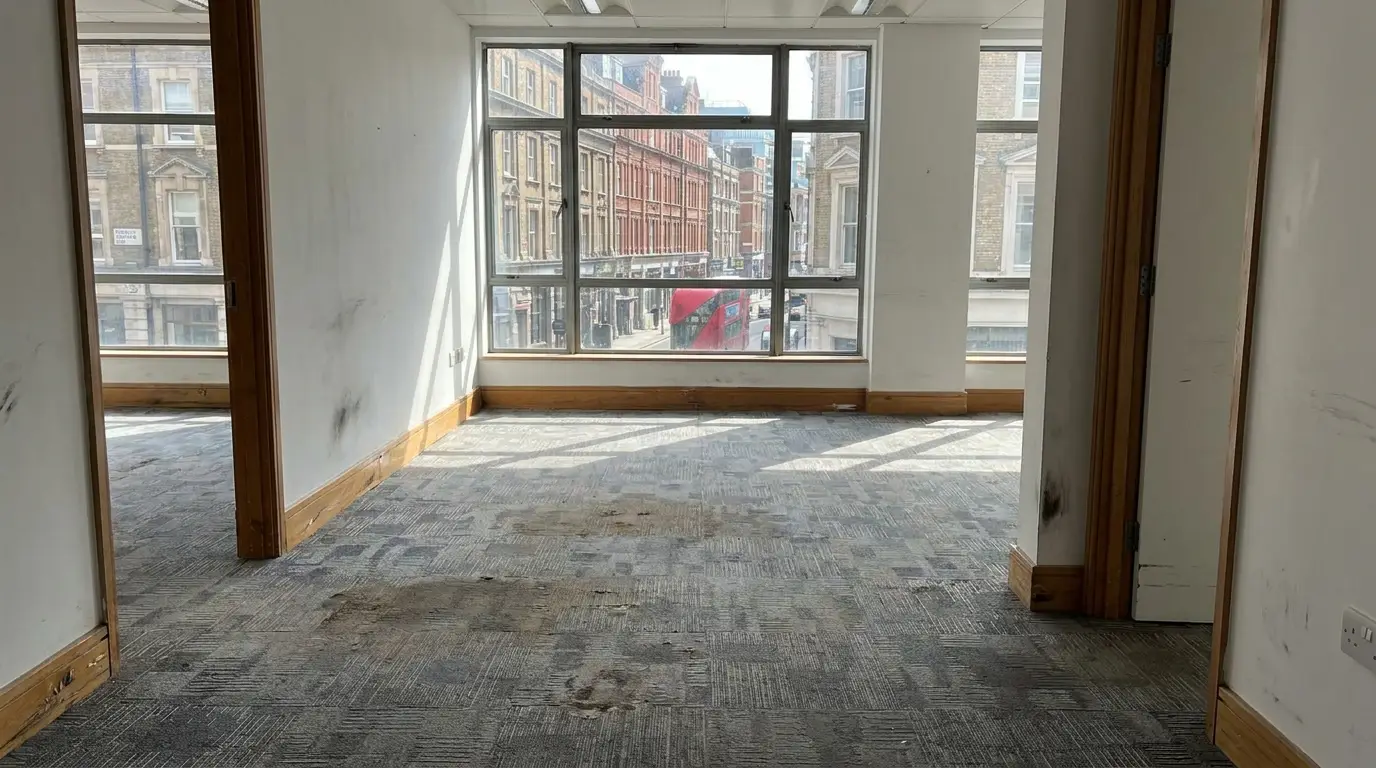
Carpet, LVT, and concrete screed damage from use, furniture, and fit-out works. Landlords often claim full replacement - this is a key negotiation point. The test is repair vs. replace.
Ceiling & Wall Repairs
Holes, staining, water damage, cracked plaster. Listed buildings and period conversions in EC1, WC1, and Chelsea carry premium costs for ornamental plasterwork.
M&E Systems
HVAC not serviced, electrical boards not updated, pipework not maintained. This generates the most disputed items - lease commencement condition is critical evidence.
Fixtures & Fittings
Damaged doors, handles, ironmongery, and window mechanisms. Often overlooked by tenants during occupation, these items appear routinely in landlord schedules.
How to reduce your liability
Commission an Independent Condition Survey Early
Engage a Building Surveyor 18-24 months before lease expiry. An independent Condition Survey gives you an objective view of the gap between current state and lease obligations - and time to address it at your pace, with your contractors, at competitive rates. Emergency remediation in the final weeks of a tenancy, at peak contractor availability, costs two to three times more than planned works.
Carry Out Works Proactively - Don't Wait for the Schedule
If you complete required repairs, redecoration, and reinstatement to a satisfactory standard before handing back keys, the landlord has no actionable claim for those items. A professional contractor who understands lease covenants can work systematically through your obligations, producing before-and-after photographic documentation that withstands surveyor scrutiny.
3COL carries out dilapidations programmes for commercial tenants across Central London - EC1, W1, SW1, E14, SE1 - with fixed-price quotations and complete documentation.
Investigate Section 18 and Supersession
If the landlord intends any significant works after your lease ends - refit, refurbishment, demolition - a portion or all of their claim may be extinguished. Check planning applications. Ask about post-lease use. Section 18 and supersession arguments are worth exploring even when they seem unlikely - the potential reduction is substantial.
Office vs retail dilapidations
Office leases in Central London (EC1, W1, SW1, E14) focus on internal condition, M&E systems, and reinstatement of alterations. Retail leases - particularly on high streets in Chelsea (SW3), Kensington (W8), or Mayfair (W1) - carry additional obligations: shop-front maintenance, signage removal, external decoration, and sometimes specific fit-out reinstatement where the landlord contributed to the original fit-out.
Retail dilapidations in prime London locations are typically higher per sqft than equivalent office claims, because original fit-out specification is higher and reinstatement requirements are more specific. If your retail premises has an Alterations Licence, read it carefully - the exact scope of reinstatement should be specified there.
For tenants of commercial office space in London, the most effective mitigation strategy is systematic repair and redecoration in the 12-18 months before expiry, combined with a clear reinstatement plan for alterations. 3COL provides fixed-price dilapidations programmes for office premises across our core Central London postcodes, with other areas on request.
Common questions
What are dilapidations in a commercial lease?
What is Section 18 of the Landlord and Tenant Act 1927?
How much do dilapidations cost in London?
What is a Schedule of Dilapidations?
What is supersession in dilapidations?
When should a commercial tenant start preparing for dilapidations?
Can a tenant carry out dilapidations works themselves before leaving?
What does reinstatement mean in a commercial lease?
What is a Terminal Schedule of Dilapidations?
What is the Dilapidations Protocol?
Start here
Request a free site visit
Free site visit, then a written quotation. Very large jobs can take longer to quote.
07427 135911Mon–Fri 7am–8pm · Sat–Sun 8am–6pm